
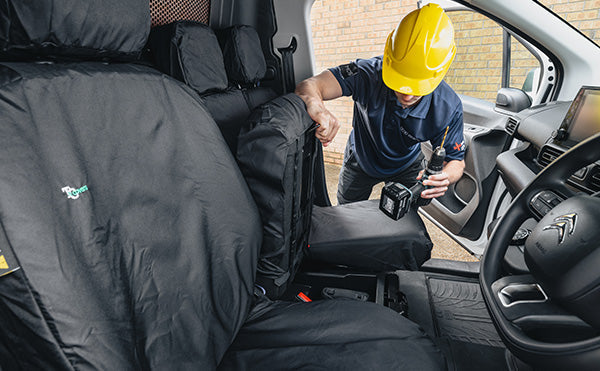
Whether you rely on your van for work every day or simply want to protect your vehicle’s interior from wear and tear, choosing the right seat covers is more important than most people realise. Not all seat covers are created equal, and the differences often come down to material quality, fit, safety, and verified performance.
This guide breaks down what actually matters when choosing the best car seat covers in the UK to ensure your vehicle remains protected and your resale value stays intact.
Material Matters: Not All 600 Denier Polyester Is Equal
If you’ve spent any time looking at seat covers, you’ve likely come across “600 denier polyester” often marketed as the benchmark for durability. But that label alone doesn’t tell the full story.
What is Denier?
“Denier” refers to the thickness of the fibres used in the fabric, specifically, the weight in grams of 9,000 metres of yarn. A 600 denier fabric strikes a balance between strength, flexibility, and comfort, which is why it’s widely used in protective applications.
However, the quality of the polyester itself can vary significantly:
-
Lower-grade polyester can feel stiff, rough, or plasticky
-
It may emit a strong chemical odour, especially in enclosed vehicle cabins
-
The coating and backing layers can degrade quickly under daily use
The REACH and PFAS Compliance Factor
There’s also an important compliance issue to consider. Cheaper fabrics may contain PFAS (per- and polyfluoroalkyl substances) — a group of chemicals used for water and stain resistance. While effective, PFAS are increasingly scrutinised due to their persistence in the environment and potential health risks.
In the UK, manufacturers should comply with UK REACH regulations, which govern the safe use of chemicals in products. Non-compliant materials may still enter the market via low-cost imports, so it’s worth checking whether a supplier can confirm compliance.
In short: 600 denier is a starting point, but not a guarantee of quality.
Details of the testing we carry out can be found on our seat cover materials page.
Fit and Design: Why Proper Patterning Matters
One of the biggest differences between seat covers lies in how they’re designed.
Many companies rely on off-the-shelf patterns purchased from third parties. These patterns are often based on older vehicle models and may not reflect how seats have evolved over the last 10–15 years.
Modern vehicle seats are significantly more complex than they used to be. Manufacturers have introduced:
-
Integrated side airbags
-
Enhanced lumbar support and bolstering
-
Built-in armrests and storage features
-
Adjustable headrests with varied geometries
Seat covers that don’t account for these changes can:
-
Simply not fit over the seat
-
Interfere with seat functionality
-
Reduce driver comfort over long periods
Some brands prioritise visual styling, camouflage prints and bright colours over functional design. But for working vehicles, especially, a functional fit is far more important than aesthetics.
A well-designed seat cover should follow the contours of the seat closely and allow full use of all features without compromise.
Safety: The Truth About Airbag Compatibility
“Airbag compatible” is one of the most commonly used and misunderstood claims in the seat cover market.
In many cases, this claim is based on informal or inadequate testing. Some manufacturers simulate deployment by manually triggering airbags in uncontrolled environments such as workshops, car parks, or even gardens.
The problem is that proper airbag testing requires:
-
High-speed measurement equipment capable of tracking deployment in milliseconds
-
Controlled conditions to ensure repeatable results
-
Analysis of deployment direction and obstruction
-
Verification that full inflation occurs without restriction
Without this level of testing, there’s no reliable way to confirm that a seat cover won’t interfere with the airbag’s performance.
A poorly designed cover could:
-
Delay deployment
-
Alter the direction of the airbag
-
Restrict full inflation
When safety is involved, assumptions aren’t enough. It’s worth asking what level of testing has actually been carried out, not just whether a claim is made.
Waterproof Protection: More Than Just a Claim
For many van users, waterproofing is non-negotiable. Dirt, spills, tools, and daily wear all take their toll on vehicle interiors.
But “waterproof” can mean different things depending on how the material is constructed.
A high-quality waterproof seat cover typically includes:
-
A durable outer fabric (such as 600D polyester)
-
A waterproof backing or membrane
-
Sealed or reinforced stitching to prevent ingress
Crucially, reputable manufacturers will have their materials independently tested to verify performance claims. This may include hydrostatic head testing or other recognised methods to measure water resistance.
Expert Guidance: Choosing the Right Cover for Your Needs
With so many variables, such as material, fit, safety, and performance, choosing the right seat cover isn’t always straightforward.
That’s why access to expert guidance matters.
Depending on your vehicle and how you use it, you may need:
-
Tailored seat covers for a precise, factory-like fit
-
Heavy-duty universal car seat covers offer flexibility across multiple vehicles
-
Advice on compatibility with specific seat features
A knowledgeable supplier should be able to:
-
Confirm fitment for your exact vehicle model
-
Explain the differences between product options
-
Provide reassurance on safety and compliance
If you can’t easily contact a company or get clear answers, that’s often a red flag.
For expert guidance when selecting seat covers for your vehicle, please feel free to contact our knowledgeable team on 02392 474711. Alternatively, you can email us at info@townandcountrycovers.com and we will be happy to assist you.
Final Thoughts
The best car seat covers in the UK aren’t defined by price or marketing claims alone. They’re defined by verified material quality, accurate fit, proven safety, and tested performance.
For tradespeople and everyday drivers alike, investing in the right seat covers means protecting not just your vehicle, but your comfort, safety, and long-term costs.